Benjamin Maloney
Artistic Director
Benjamin Maloney is a doctoral researcher at the University of York, specialising in the intersection of historical linguistics and performance practice. His work encompasses the musical cultures of the early modern Anglosphere, as well as the development of the English language with a particular focus on diachronic phonology (how the sound system has changed over time). He holds a master’s degree in keyboard performance from the Royal Northern College of Music and serves as a Musicality judge for the British Association of Barbershop Singers. Outside of academia, Benjamin regularly performs on the harpsichord and organ, composes piano rags, plays in a viol consort, and enjoys singing a variety of a cappella music.

Michael Winter
Academic Advisor
Michael Winter is a musicologist and editor of early music. He is nearing the completion of his doctoral research under the supervision of Prof. Magnus Williamson at Newcastle University. His research examines fragmentary works from the Eton Choirbook, using the reconstruction process to study fifteenth century compositional decision-making and contemporary reconstruction practices. He is an active editor of Renaissance polyphony, editing early music for national and international research projects.

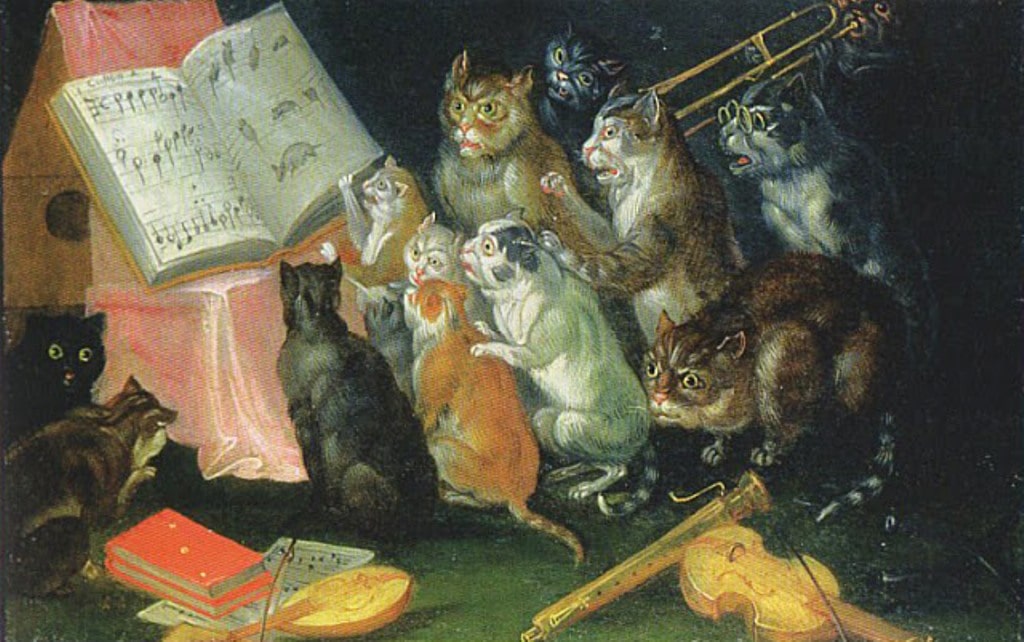
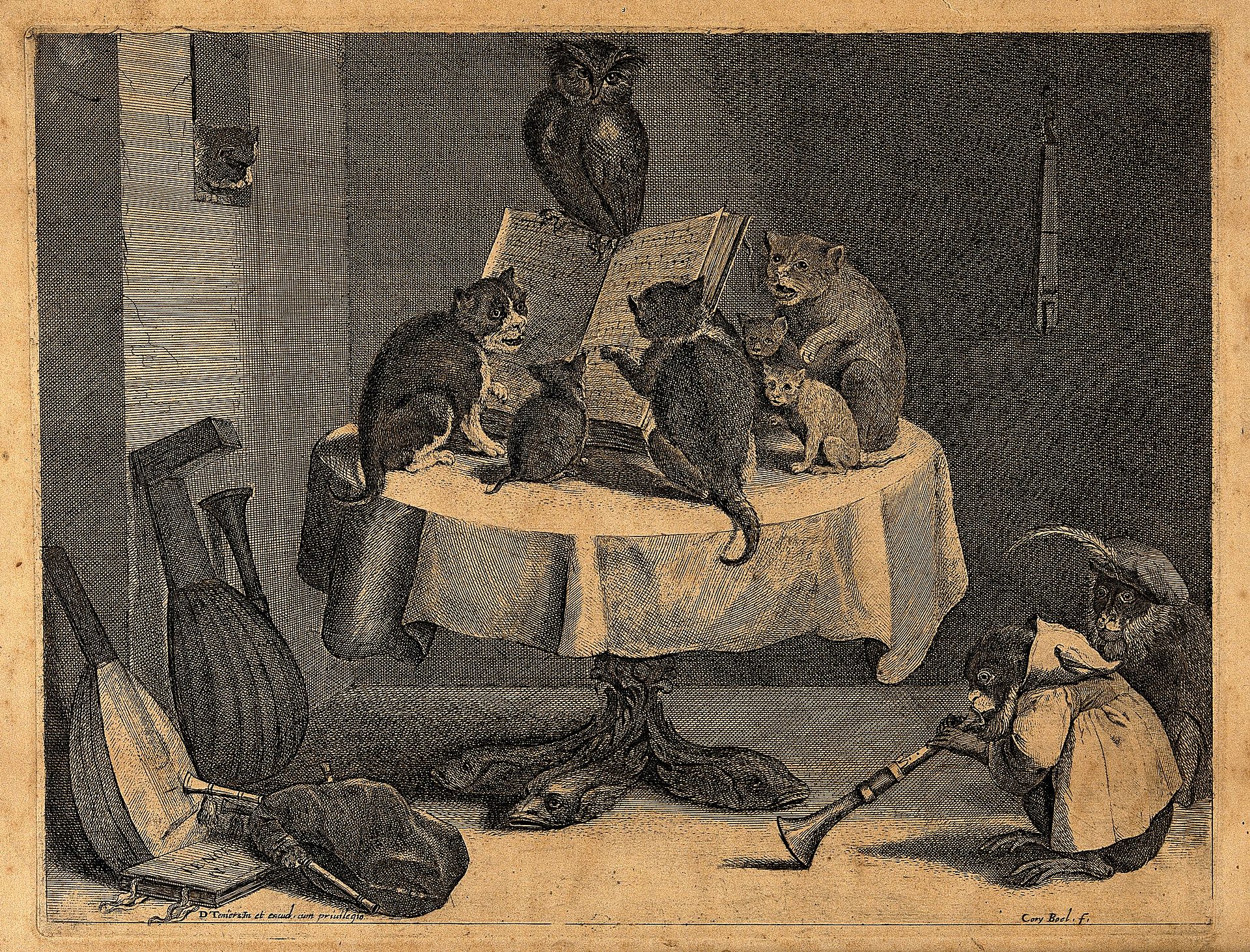
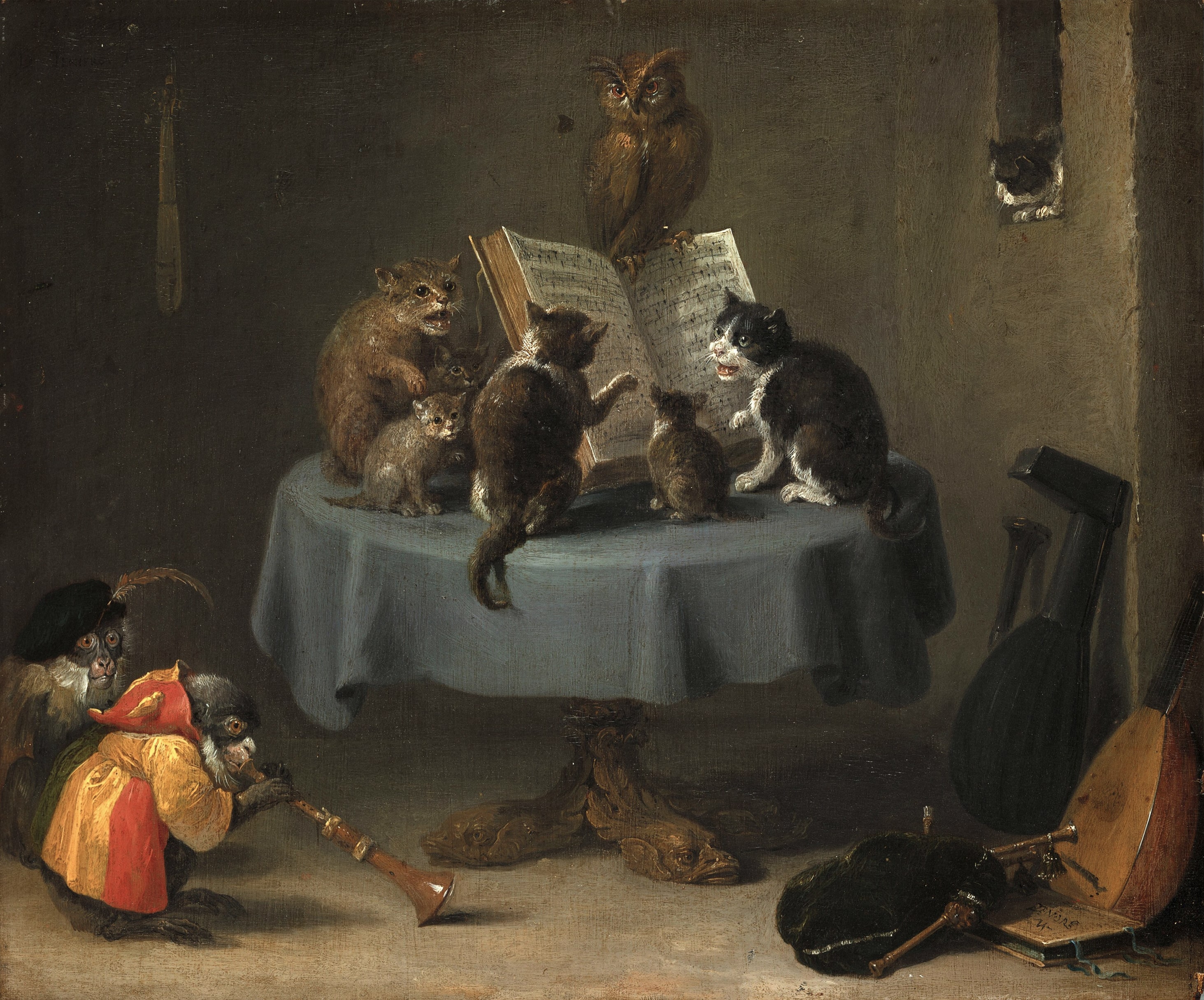
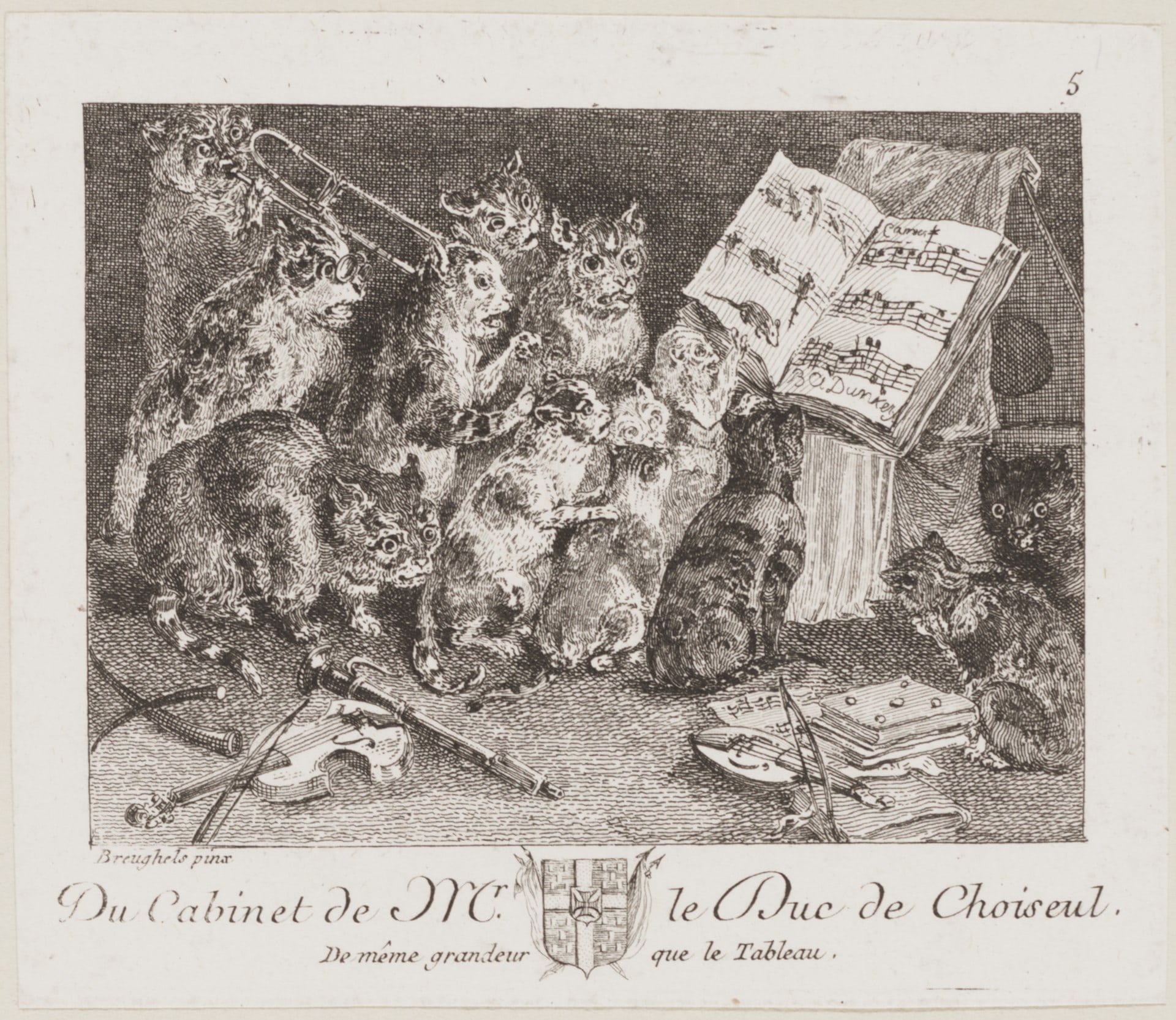
[Cats have sundrie voices.] Ere I had been long in this contemplation : the Cats whose crying the night before had been occasion of all that which I have tolde you: were assembled again in the Leads which I spake of, where the dead mens quarters were set up. And after the same sort as they did the night before: one sung in one tune, an other in an other even such an other service, as my Lords chappel upon the scaffolde song before the King, they observed no Musicall cordes neither Diatessaron, Diapente, nor Diapason, and yet I ween I lye, for one Cat groning as a Beare dooth, when Doges be let slip to him, throwled out so lowe and loud a base, that in comparison of an other Cat which crying like a yung Childe squeiled out the shriking treble : it mought be wel counted a double Diapason.
It were good for us to hire him or other preests at our deliverye to sing a mas before our kitlings, that they might in their birth be delivered of their blindenes, & sure if I knew that preest : it should scape me hard but I would have one litter of kitlings in some chamber where he useth now to say his privy night masses.
Thus dooing thou canst not doo amis but shalt have such good reporte through thy Cats declaration: that thou shalt in recompence of maister Streamers labour who giveth thee this warning, sing unto God this Himne of his making.
Beware the Cat (William Baldwin, 1584)
Catch sung. Enter Maria.
Maria
What a caterwauling do you keep here! If my lady have not called up her steward Malvolio and bid him turn you out of doors, never trust me.Toby
My lady’s a Cataian, we are politicians, Malvolio’s a Peg-a-Ramsey, and Sings. Three merry men be we. Am not I consanguineous? Am I not of her blood? Tillyvally! “Lady”! Sings. There dwelt a man in Babylon, lady, lady.Twelfth Night, Act 2, Scene 3, 73–80 (William Shakespeare, c.1601–2)
Commandement was giuen, that there should no drinke be touched, till she that was master ouer her husband, had sung a Christmas Carroll: wherupon they fell all to such a singing, that there was neuer heard such a catterwalling péece of Musicke. Wherat the Knight laughed heartely, that it did him halfe as much good, as a Corner of his Christmas Pie.
Pasquils iestes mixed with Mother Bunches merriments (Pasquil, 1609)
Lady, come down and see the cat sits in the plum tree.
Pammelia (Thomas Ravenscroft, 1609)
It is Musick of it selfe, and it is composed, and consists of Frets, Stops, Clefts, Moods, Flats, Sharpes, Spaces, and most strange Notes, Tones, and Tunes, Phrygian, Lidian, Dorian, nine poynts above Ela, and two pots below Gamoth: For upon the Ale-bench, they are all compacted of Quavers, Semiquavers, Sembriefes, Minnums, and Crotchets: One squeaks shrill, like an, Owle, another Brayes the Descant, like an Asse, a third bellowes the Tenor, like a Bull, a fourth Barks the Counterpoint, like a Hound, a fift howles the Treble, like a Wolfe, and a sixt grunts the Base, like an Oxe: that what with the ravishing sound of Sackebuts, Canary Pipes, Tobacco Pipes, Flouts, (or Fluits) Shames, Bad-pipes, weights, Hoboyes, Clinking and Knocking of Pots, Stamping, Dancing, and Singing to confused Noyses; there is daily such sweete and Contagious Harmony amongst them, that a man cannot any way compare the deliciousnes of it to any thing more significantly, than to most Eare-bewitching Caterwauling; or their rending and tearing of tunes, are as delightfull to the hearing, as the fat end of a Pudding.
The womens sharpe revenge […] performed by Mary Tattle-well (John Taylor, 1640)
[Cats] love fire and warm places, whereby it often falleth out that they often burn their Coats. They desire to lie soft, and in the time of their lust (commonly called cat-wralling) they are wilde and fierce, especially the males, who at that time (except they be gelded) will not keep the house: at which time they have a peculiar direful voice.
The history of four-footed beasts and serpents […] (Edward Topsell, 1658)
But at supper there played one of their servants upon the viallin some Scotch tunes only; several, and the best of their country, as they seemed to esteem them, by their praising and admiring them: but, Lord! the strangest ayre that ever I heard in my life, and all of one cast. But strange to hear my Lord Lauderdale say himself that he had rather hear a cat mew, than the best musique in the world; and the better the musique, the more sicke it makes him; and that of all instruments, he hates the lute most, and next to that, the baggpipe.
The Diary of Samuel Pepys (Saturday 28 July, 1666)
The Caterwauling, a Song made at Epsom alluding to an Intrigue there.
TWO Cats were playing by a Well side,
And one of these two Cats fell in,
The Cat that was left most bitterly wept,
Because she was t’other Cats Cozen Jermain.But e’re she could hide her sorrows, and wipe
The Tears from her fair sweet Eyes that fell,
Malitious Fate brought another fierce Cat,
To see her bemoan her dear Love in the Well;
Some time this Cat in a Window had sat,
And seen her bemoan her dear Love in the Well.This Cat of mode did the t’other Cat keep,
And had given her many a Rich Tabby Gown,
Deserted his Spouse, to feast her with his Mouse,
And made her outbrave all the Cats in the Town;
Her Champion was, in all Chances befell her,
And had often fought for her in Garret and Celler.But now his heart with jealousie burns,
His Eyes he inflames, and his Claws does whet;
The loving Pur to loud howling he turns,
And Lyon-like stares on the other poor Cat:
Ah! false one, crys he, what a plague did you want,
To howl for this Fool, and desert your Gallant?Have I so long bin your Cully and Fop,
A New collection of songs and poems (Thomas D’Urfey, 1683)
And kept my poor Wife so long from Town?
Spent all my Estate to keep you at your rate;
Every Tooth in your head has cost me a Pound,
And am I thus Jilted by a Cat-Whore,
Go, go, you’r a Puss, and I’le see ye no more!
Mercury
Amphitryon (John Dryden, 1691)
What sawoy Companion is this, that deafens us with his hoarse Voice? what Midnight Ballad-singer have we here? I shall teach the Villain to leave off Catterwawling.
Sosia
I wou’d I had Courage, for his sake; that I might teach him to call my singing Catterwawling, an Illiterate Rogue; an Enemy to the Muses and to Musick.
Fernando
The Fatal Marriage (Thomas Southerne, 1694)
What, I suppose you were with him last night, a Serenading (as you pretty Gentlemen call it) but in my language, ‘tis catterwawling; good for nothing but to disturb a civil neighbourhood; waken our Wives into wicked wishes; and put ’em in mind of younger Fellows than their Husbands.
The cats as other creatures do
use to swagger, and make love too.
And in the dark and coldest night,
These Jeffry Lyons use to fight;
Then they cry, “mew”, “puss”,
but the cruel’st battle far,
was lately fought at Temble bar,
upon the tiles o’the house there;
Where Bolo Sir Bore Cat was heard to swear:
“The slave that courts my puss shall die.”
To whom Sir Sharp Nail gives the lie.
Then they cry, “mew”, “puss”
And so they fiercely both sides join,
asking, “who shall die tear that coat and mine?”
“Though and I”, thus they cry, “mew”,
still they cry, “mew”.The Cats (William Lawes, 1635)
A Catch on Midnight Cats, by Michael Wise:
Ye Cats that at midnight spit Love at each other
who best feel the tattered Fur
if the business of Love be no more to Pur.Old Lady Grimalkin with Gooseberry Eyes,
when a Kitten knew Love fit’s soon o’er,
Pus, Pus last not long but turns to Catwhore.Men ride many miles, Cats tread many Tiles,
both hazard, both House or a Wall keep their Feet,
mount their Tails, mount their Tails and away.A Cat Catch, by Richard Brown:
We Cats when assembled at Midnight together,
for innocent Puring, Puring, for innocent Puring,
puring, in Moonshiney weather.If Dogs be in kennel, all fast in their straw,
we march, and we meaw, meaw, meaw
whitout scratch or a claw.But if they suprise us, and put us to flight,
we fret, fret, and we spit, fret fret, spit, spit,
give a squall, squall and good.Two Cat Catches in The Catch Club or the merry Companions […] (1731)